 |
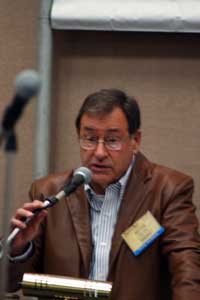
| The easiest way to ensure financial safety is to plan ahead, know what you’ve got and know where you want it to go, said Wythe Willey of CATL Fund. |
“Two things will happen soon,” said Wythe Willey of the organization Cattlemen Advocating Through Litigation Fund (CATL Fund). “Soon a huge transfer of property from older to younger generations will take place as WWII veterans and Baby Boomers die. And, soon there will be a large about of money from younger to older generations due to Social Security tax.”
Willey said this doesn’t have to become a major problem. The easiest way to ensure financial safety is to plan ahead, know what you’ve got and know where you want it to go.
“It takes a lot of effort. Plans should be as simple as possible; they should be tailored to you and your situation,” Willey said. “If you read a line in your will and don’t understand it, it’s time to rewrite it and make it easy.”
For agricultural families it can be a somewhat harder task. The speakers suggested you make special accommodations for your children who stay home and help maintain the farm. It is on rare occasion that children who move to the city actually want to go back to the farm after the parents die. So make sure that you don’t create a sibling argument over what to do with the land.
To make sure the will is valid and carried out properly, hire a lawyer, Willey suggested. While some may be reluctant to do so, it is worth it, he added.
“It doesn’t have to be too hard of a process,” Willey said. “Really, your lawyer and accountant should be like your veterinarian. You know how to tend for cattle, but you call your vet when you get in a pickle. Overall health for you and your dealings is the ability to call upon a professional.”
Joe Guild of CATL Fund provided session attendees with a checklist of the basics to discuss with an attorney and things to compile before the first attorney visit:
• Do your homework and engage an attorney who specializes in estate planning. Satisfied testimonials from friends and neighbors are usually the best recommendations.
• Inventory your assets and liabilities.
• The tools in the tool box:
| Will Power of attorney (finances and management) Durable powerof attorney for health care Corporation or partnership Life insurance Conservation easements Gifting plans IRAs (individual retirement accounts) Trusts Charitable foundations Charitable giving Joint tenancy with right of survivorship Discuss the current status of the estate and gift tax, commonly called the death tax College funds |
• Get other advisors, if needed.
| Accountant Appraiser Realtor Stockbroker |
In 2009, the maximum tax rate for the death tax will be 45% with a $3.5 million exclusion. The Tax Reconciliation Act of 2001 will eliminate the death tax for 2010. But in 2011, a sunset clause in the act will reset the death tax to 2001 levels. So, in 2011 the maximum tax rate will be 55% with a $1-million exclusion.
“If you’re lucky enough to die in 2010, your family won’t have an estate tax,” Guild joked. “It is important to ask the questions: ‘How much is my estate worth?’ and ‘Am I going to be exempt?’ ”
Many things were suggested to help ensure minimal expenses after death. However, the best solution for you and your family is to assess all assets and liabilities and get a lawyer to help develop a plan that suits your needs. But remember, you don’t know how long you have before you die, but you don’t know how long you have to live either — or how much money it will take to do it. So be sure to save for a healthy retirement, as well as saving for your after-death expenses.
— by Tosha Powell